“Absolutely no doubt – we could work together easily if the call came” – British sailors pleased with their visit to Helsinki
A successful joint exercise, football, local food, and saunas had Royal Navy sailors enthusiastic about Finland.
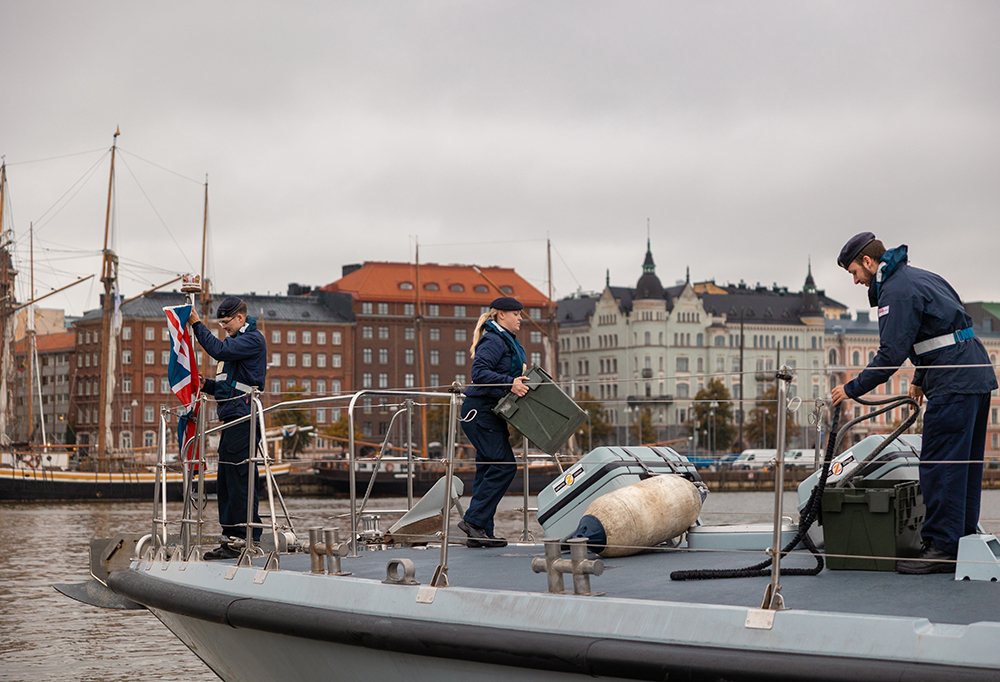
Four Royal Navy Archer-class patrol boats participating in the Joint Expeditionary Force's (JEF) TARASSIS activity stopped for a visit to Helsinki earlier this month.
For many of the crew, Finland and the Eastern Baltic as a whole were an entirely new and interesting environment to experience.
– This is the furthest east within the Baltic Sea that I’ve ever been. The previous furthest was Germany and the west coast of Sweden, said Lieutenant Ed Winter, currently leading the ship group during their TARASSIS exercises.
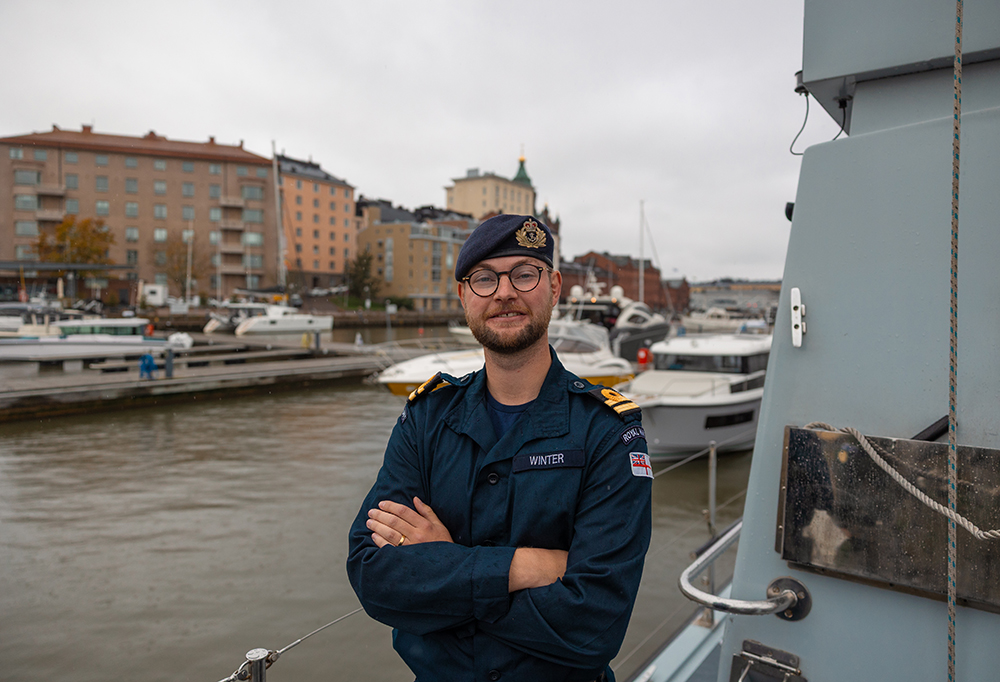
Lieutenant Ed Winter said he enjoyed his first visit to Finland. Credit: Remu Shemeikka
Taking it easy in Helsinki
Football fans among the sailors got to watch a match between local clubs HJK and Gnistan. Some were familiar with Teemu Pukki, playing as a striker for Helsinki's HJK, having previously played for Norwich City in the Premier League.
– We also got to explore the city, do a bit of shopping and have a bit of food, said Leading Rate Sean Swain Howbrigg, the leading engineering technician of HMS Pursuer.
Swain Howbrigg, who worked as a chef before becoming an engineer, enjoyed the food on offer in Helsinki, a sentiment shared by Winter, who said he enjoyed fresh local fish, wild duck, and mushrooms.
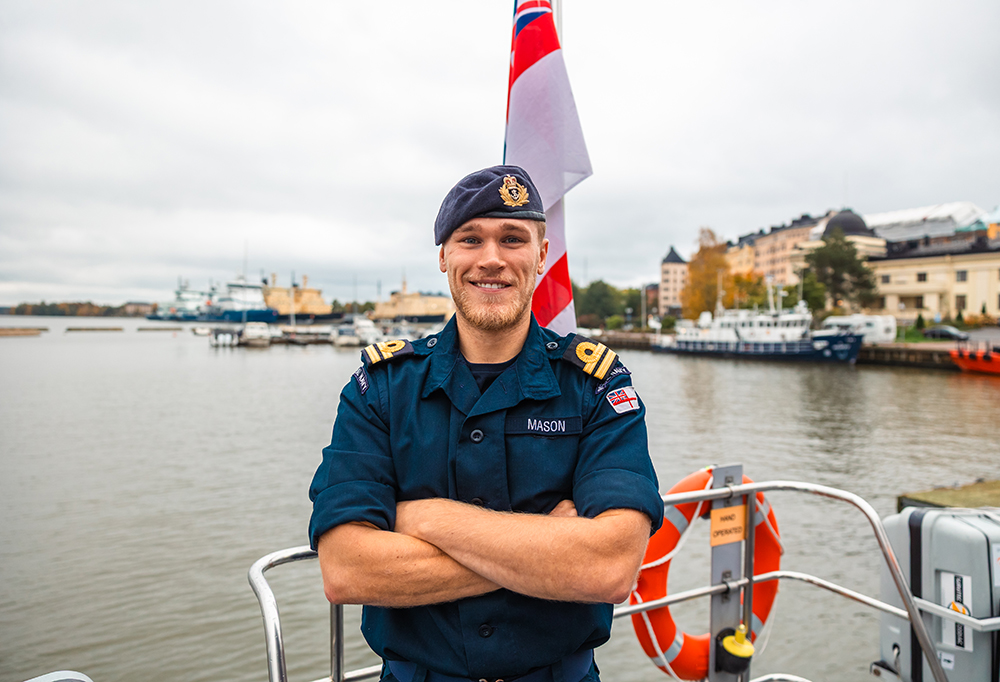
– I was able to experience some of the local food as well, having moose burger, rainbow trout, all of that really nice food, which we don’t normally have at home, added the commanding officer of HMS Dasher, Lieutenant Jack Mason.
Another highlight for many of the crew was the opportunity to experience local sauna culture.
– Finnish saunas, which are well renowned, are a time where we get to properly relax, Mason explained.
Teamwork like clockwork
In addition to their visit to the Finnish capital, the sailors praised their experience working with the Finnish Navy.
– Working together with the Finns was no challenge at all, Winter said.
At the weekend, the vessels conducted passing exercises with the missile boat FNS Hamina, with the main goals being to improve joint communication and developing teamworking ability between the two allies.
– The communication between us has been great and everything has worked like clockwork. I have absolutely no doubt that if the call came for us to work together, we’d be able to do so, really quite easily, said Mason.
Challenges in the Baltic
Despite the ease of working with their local allies, the vessels experienced certain challenges and difficulties, such as changes in weather conditions.
– We started the trip in shorts and T-shirts, but about three weeks in, you could see it starting to get colder and darker. Monitoring the sea state and significant wave height has become more important, said Winter.
The vessels have also experienced logistical challenges.
– We’ve occasionally had to make stops in new ports which weren’t planned on. Trying to rig up logistical support in those cases can be quite hard, said Mason.
The compact size of the P2000 Archer-class vessels means small storage spaces, so they require frequent and regular supply stops.
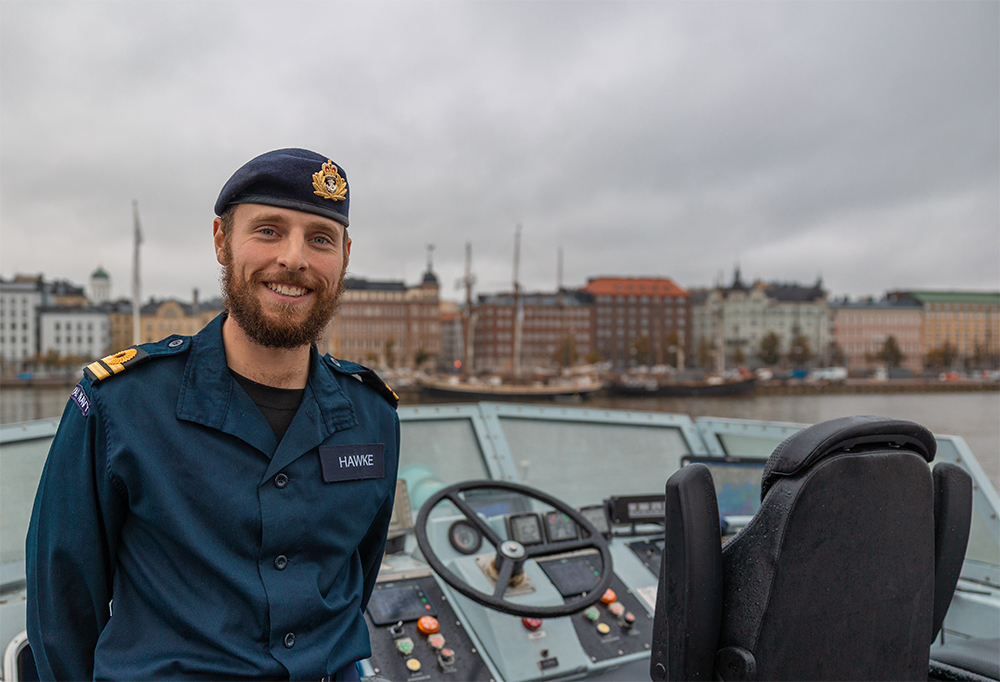
– We refuel a lot, because we do most of our operations at high speeds. If we wanted to stay at sea for longer, we could, but at a slower speed, explained Lieutenant John Hawke, commanding officer of HMS Pursuer.
From training vessels to warships
Archer-class patrol boats have long been used as training vessels by the Royal Navy.
– They’re quite old ships—mine was built in 1988—and they were originally designed for the training of officers and university students. They gave university students a taste of naval life, Hawke explained.
The patrol boats have now been upgraded, receiving, among other modifications, new engines and modern navigation technology.
– These ships started off with a top speed of about 12 knots, but now our improved engines give us top speeds in excess of 20 knots, Hawke said.
In recent years, this class of vessel has been increasingly used in potential combat roles. Two of those that visited Helsinki, HMS Pursuer and HMS Dasher, were equipped with gun mounts, since their 2020–2022 assignment to protect the territorial waters of Gibraltar.
The role of the P2000 as a training vessel still remains significant. According to Hawke, their small size makes them ideal in this regard.
– We can let people make more mistakes while training, since the ships are more manoeuvrable and can stop really quickly. And, as you know, when people make mistakes, they learn. On a big ship you couldn’t take such risks as much, he explained.
– When we are conducting our normal operations, for example TARASSIS exercises, during which we work as part of JEF alongside our key allies, we can have the able ratings and trainee officers on board getting experience at sea and learning new skills, he said.
“I’d like to stay in this job forever”
Officers and enlisted seamen alike said they were happy serving aboard the Archer vessels.
– I recently got promoted, so I’ve had to do four years of return of service. I’ve got two years left of that, but I’d like to think I’ll stay a lot longer, said Swain Howbrigg.
Before his assignment to HMS Pursuer, Swain Howbrigg worked as an engineer on the aircraft carrier HMS Prince of Wales – one of only two Queen Elizabeth-class vessels, the largest class of ships ever used by the Royal Navy.
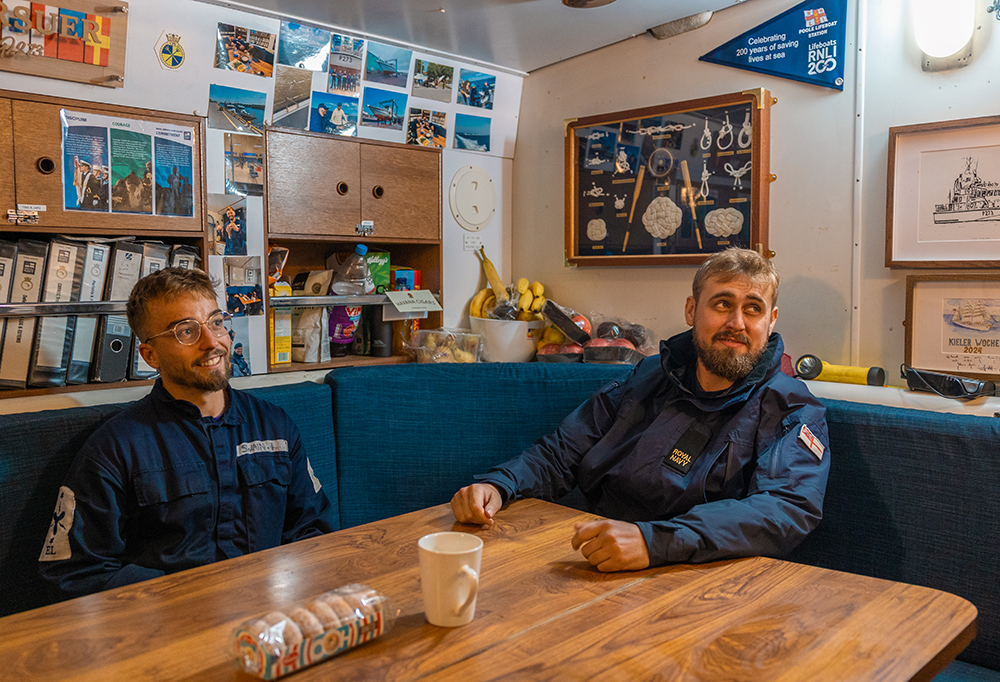
– I’d like to stay in this job forever, or at least as long as I can, added Able Rate Vinny Bird, a new sailor working on the HMS Dasher.
A benefit of serving on these vessels is the opportunity to travel to new places, such as Finland.
– One of the top reasons why anyone joins the navy is to have port visits like this one, and be able to experience new cultures, see great sights, and eat amazing food, said Mason.
HMS Express, HMS Pursuer, HMS Dasher, and HMS Puncher left HMNB Portsmouth in August. In August and September, the vessels participated in the German-led Northern Coasts exercise. Since September they have participated in the JEF-organised exercises as part of the live activity TARASSIS. Other than Helsinki, their stops in the Baltic have included Tallinn, Riga, Gdansk, and Kiel. After continuing on to Sweden, the vessels returned to Great Britain.


